
Walk into a freshly painted room and your eyes land on the walls first. Then they drift lower, and the baseboards tell the real story. A chipped corner, a yellowed edge, a scuff from the vacuum. Small flaws, big impression. This is why many homeowners in Kitchener, Waterloo and Cambridge now research molding and trim painting services Waterloo before choosing a single wall color. We wrote this blog to cover what the work costs, how to prepare, and when professional help pays off.
What Counts as Trim and Molding?
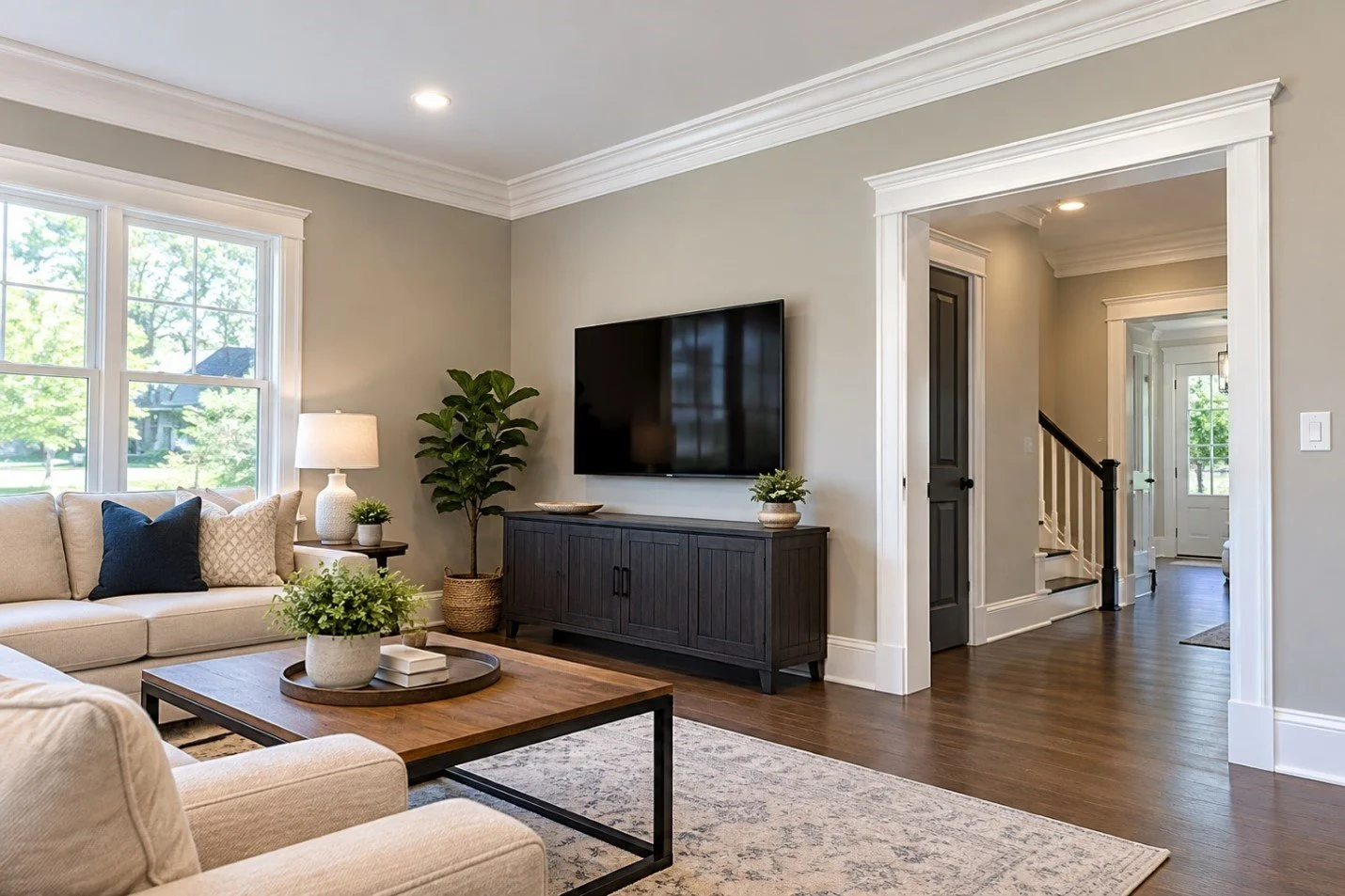
Trim is the finishing layer that frames a room. Molding is its shaped, decorative cousin. Most homes carry both.
Common areas include:
Baseboards along the floor
Door and window casings
Crown molding at the ceiling line
Chair rails and wainscoting caps
Mantels, built-in shelves and stair parts
Each piece needs its own mix of sanding, filling and brushwork. That is why trim work is priced differently from open wall surfaces.
Why Trim Needs Its Own Plan
Trim lives a harder life than walls. Shoes brush it, chairs bump it, pets scratch it, and cleaners wear it down week after week. A finish that suits a bedroom wall may not last a season on a hallway baseboard.
Age adds another layer. Many homes in our region carry decades of old coatings, some of them oil-based. Older houses may also contain lead paint, so testing before any sanding is a sensible step.
What Affects the Cost of Trim Painting?
Quotes vary because every home is different. Here are the main drivers.
Cost Factors to Expect
Linear footage: total length matters more than room size. A small home with heavy casings can cost more than a larger, plainer one.
Surface condition: peeling paint, gaps and dents add repair hours.
Profile detail: ornate crown molding takes longer to coat than flat boards.
Color change: moving from dark wood to white needs extra primer and coats.
Access: tall ceilings, stairwells and crowded rooms slow the crew.
Product choice: hard-wearing enamels cost more per liter but last longer.
Typical Price Ranges
These are general estimates, not firm quotes. Interior baseboard painting often falls between $2 and $5 per linear foot, depending on prep. A main floor of trim might run from about $800 to $2,500. Full-home packages that include doors and casings climb higher.
Where Savings Are Realistic
Book trim with wall painting in one visit
Clear furniture and décor before the crew arrives
Choose a classic color, since fewer coats mean lower labor.
Repair small issues early, before they spread.
Prep Steps That Decide the Result
Paint only looks as good as the surface beneath it. Most failures we see trace back to this stage, not the paint itself.
Clear the area. Move furniture, lift rugs and cover floors with drop cloths.
Clean the surface. Dust, grease and fingerprints block adhesion, and a mild degreaser handles them well.
Repair damage. Fill nail holes and dents, then sand smooth.
Caulk the gaps. A thin bead along the top edge of baseboards closes the seam with the wall.
Prime where needed. Bare wood, stains and patched areas all need a primer coat.
Mask with care. Use quality painter’s tape and press the edge down firmly.
Sand lightly between coats for a smooth, even film.
Baseboard Painting Tips
Slide a thin guard along the floor to protect flooring.
Cut in with an angled brush for crisp lines.
Apply thin, even coats rather than one heavy layer.
Pull tape away while the final coat is slightly tacky, keeping the angle low.
Choosing the Right Paint and Sheen
Semi-gloss and satin are the popular picks. Both resist scuffs and wipe clean easily. Waterborne enamels form a hard, smooth film with lower odor, which suits occupied homes.
White remains the safest option. Still, a soft grey or deep charcoal can make casings look like architecture instead of an afterthought. Test a sample on a scrap piece first, because light in a north-facing room can shift a color quickly.
Timing and Room Conditions
Our climate shapes the schedule. Winter air is dry, and windows stay shut, so ventilation matters for odor and drying. Summer humidity slows curing, which can leave a tacky surface for longer than expected.
Interior projects run well all year. Exterior trim painting is best from late spring to early fall, when temperatures stay steady, and surfaces are dry. Always follow the recoat window on the can.
DIY or Professional: Which Fits Your Home?
DIY can work for one room with simple boards. Plan on a full weekend, a steady hand and patience with taping.
Professional help makes sense when:
The home has detailed molding or tall ceilings.
Old coatings need testing or careful removal.
A sprayed, factory-style finish is the goal.
A deadline is close, such as a listing date or a move-in
A trained crew also arrives with the right tools, which shortens the timeline.
Mistakes Worth Avoiding
Painting over hinges and hardware instead of removing them
Mixing sheens from room to room
Brushing over dust left behind on high crown molding
How to Compare Quotes
A low number can hide a thin scope. Ask each contractor to spell out:
Which prep tasks are included
The number of coats and the primer type
Paint brand and sheen
Cleanup and floor protection
Warranty terms
Clear answers usually signal a dependable team.
Conclusion
Good trim finishes a room the way a frame finishes a photograph. It draws little attention when done well, and plenty when it is not. Knowing the cost drivers and prep steps puts you in a stronger position before any contractor arrives.
At 180 Transformations, we deliver careful molding and trim painting services across Kitchener, Waterloo, Cambridge and Guelph. Contact us for a detailed estimate, and we will walk through your project step by step.
FAQs
How is baseboard painting usually priced in Waterloo Region?
Most contractors price by linear foot or by room. Ask for an itemized quote so repairs and primer appear as separate lines.
Should trim be painted before or after the walls?
Both orders work. Many painters finish the walls first, then the trim, because crisp trim lines are easier to protect from drips.
How long before painted trim can be touched or reinstalled?
Water-based enamels are often dry to the touch within a few hours. Full hardness can take days or even weeks, so avoid heavy contact and follow the product label.
Can glossy or stained trim be painted without stripping it?
Usually, yes. Lightly sand to remove the shine, then apply a bonding primer. Heavily damaged finishes may still need stripping.
