
Most people learn about slick cabinet doors the hard way. Paint goes on, it beads up like rain on a car hood, and a week later it scratches off with a fingernail. Smooth plastic surfaces do not behave like wood. The good news is that painting laminate kitchen cabinets can hold up well when the right steps are followed. Below, we explain how it works, where it fails, and what else is worth considering.
First, Know What You Have
Not every shiny cabinet is the same. The material decides the method, so it pays to check before buying a single can of paint.
Laminate
Laminate is made from layers of paper and resin pressed onto particleboard or MDF. It is hard and fairly stable.
Feels like firm, cool plastic
Shows a thin dark line along the edges
Rarely peels in sheets
Thermofoil
Thermofoil is a thin vinyl film shaped over an MDF door with heat and vacuum pressure. It creates that smooth, wrapped look, including curved panel details.
Feels slightly softer and more flexible
Often has routed or raised profiles
May bubble or lift near the stove and dishwasher
Here is a simple check. Find a corner and gently try to lift the surface with a plastic putty knife. If it comes up easily, the film is already failing.
The Short Answer
Yes, with conditions. Laminate is the easier of the two. Painting thermofoil cabinets is also possible, but only when the film is firmly bonded. Heat damage, peeling, or swollen edges change the answer.
Paint does not grip glossy plastic on its own. Adhesion is everything. That is why preparation takes more time than the painting itself.
How Professionals Approach Painting Laminate Kitchen Cabinets
A dependable finish follows a clear order of work. Skipping a step usually shows up within months.
Remove and label. Doors and drawer fronts come off and receive numbers, so each one returns to its own opening. Hardware comes off too.
Degrease. Kitchens collect a fine layer of cooking oil that the eye cannot see. A strong degreaser removes it. Paint will not bond over grease.
Scuff sand. Fine sandpaper dulls the shine. The aim is a gentle texture for grip, not cutting through the surface.
Repair. Chips and small gaps are filled, then sanded flat.
Prime. A bonding primer made for slick surfaces is the most important layer in the whole system.
Apply thin coats. Two or three light coats of cabinet-grade paint outperform one heavy coat.
Cure. Paint may feel dry in hours, yet it needs days to harden. Doors that are stacked or used too soon pick up marks.
Why Spraying Often Beats Brushing
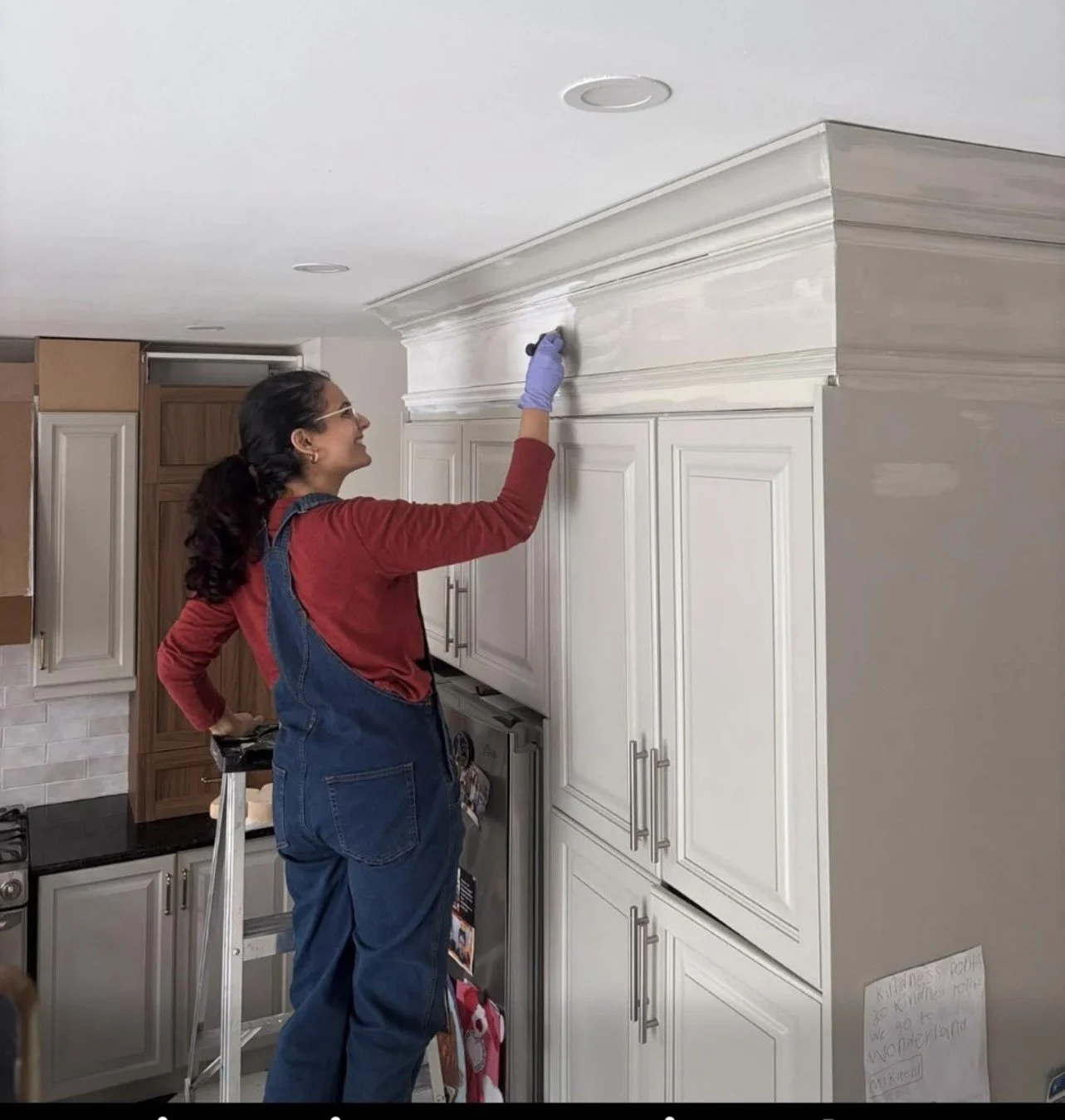
A brush leaves lines, and a roller leaves texture. Spray equipment lays down an even film that looks closer to a factory finish. Cabinet coatings are also built to withstand repeated cleaning, which matters in a room that sees steam and splashes daily.
Realistic Expectations
A painted surface will not look like solid wood, and it should not be sold that way. Seams, edges, and routed grooves may stay visible under the color. Door edges and areas around handles take the most wear, so they chip first.
None of this is a reason to avoid the project. It simply helps to know what a good result looks like. A clean, uniform, durable color in a kitchen that feels newer is a fair goal.
When Painting Is Not the Right Choice
Paint cannot repair a failing cabinet. Consider other options if any of these apply:
Thermofoil is peeling across large areas.
Doors are warped or swollen from moisture.
The core near the sink is crumbling.
The cabinet boxes are structurally weak.
Painting over these problems only hides them for a while. Loose film underneath will eventually lift the paint along with it.
Another Route: Refacing Laminate Cabinets
Refacing laminate cabinets cost keeps the existing boxes in place. New door and drawer fronts are installed, and the visible frames are covered with fresh veneer or laminate. It suits kitchens where the layout works well, but the door style is dated, or the surfaces are past saving.
What Affects Refacing Laminate Cabinets Cost
Refacing laminate cabinets is not a single number would be misleading. These factors move the total the most:
The number of doors and drawers
Door material and style, such as flat slab or shaker
The type of veneer used on frames and end panels
New hinges and hardware
Labor, plus any repairs to the boxes
In general, cabinet refacing cost sits above a paint refinish and below full replacement. A written quote is the only reliable way to learn the figure for a specific kitchen.
Painting vs Refacing at a Glance
Painting:
Lower cost
Shorter timeline
Door style stays the same
Refacing:
Higher cost
Longer timeline
New door styles are possible
Tips for a Longer-Lasting Finish
Choose a satin or semi-gloss sheen, since both wipe clean easily.
Fit a heat shield beside the oven, especially with thermofoil.
Follow the cure time printed on the product label before heavy use.
Clean with a soft cloth and mild soap. Abrasive pads dull the surface.
Test the color on the back of one door before committing to the rest.
Conclusion
The answer depends on what is under the surface. Sound laminate and well-bonded thermofoil can be painted with proper preparation. Damaged surfaces call for new fronts instead.
At 180 Transformations, we refinish cabinets with a spray process using Renner Wood Coatings, and we can inspect your doors to advise whether paint is a sensible option. A free estimate is available through our booking page, and our online cabinet refinishing estimator offers a quick starting figure.
FAQs
1. Which paint works best for laminate cabinets?
Look for a cabinet-grade enamel made for hard, non-porous surfaces. Standard wall paint is too soft for doors that are touched and cleaned every day.
2. Can thermofoil cabinets be painted if the film is peeling?
Not reliably. Loose film must be removed, and the exposed core needs repair before any coating goes on. In many cases, replacement doors are the more durable answer.
3. How does refacing laminate cabinets cost compare with painting?
Refacing usually costs more, because it involves new materials and more labor. The final figure depends on door count, style, and the condition of the existing boxes.
4. How long does a painted laminate finish last?
Lifespan depends on preparation, the products used, and daily wear. A well-prepared and properly cured finish can stay in good shape for years with gentle cleaning.
