
A kitchen can look tired long before its cabinets wear out. The boxes are solid. The doors still close. Only the finish has given up. That is why homeowners often ask us, how long do painted cabinets last once a professional has done the work? The short answer is about 10 to 15 years, and sometimes longer. The full answer depends on a few choices made before the first coat goes on. We explain them below, along with chipping and cost.
The Short Answer: A Decade or More
A professional finish commonly holds up for 10 to 15 years. Some kitchens go beyond that. Others show wear around year seven.
The range is wide because cabinet paint lifespan is never set by paint alone. It comes from a chain of steps, and the weakest link sets the limit. Think of a fence. One loose board, and the whole line looks poor.
What Decides the Lifespan of Painted Cabinets
Four factors do most of the work.
Surface Preparation
Paint grips clean, dulled surfaces. Kitchen cabinets collect grease, steam and hand oils for years. A good painter degreases every door, sands the old finish and repairs dents.
Skipped preparation is the leading cause of early failure. It is also hidden, since nobody sees it once the color is on.
The Coating Itself
Not every paint belongs on a cabinet. Wall paint stays soft and can feel tacky near hands. Cabinet-grade coatings cure hard and resist moisture.
Primer matters too, especially over oak or glossy factory finishes. Ask which products will be used, and ask for the names in writing.
Application Method
Brushed paint often leaves ridges and thin spots. Sprayed paint lands evenly, in thin layers that dry smooth. Doors are usually removed and finished flat, away from the kitchen.
Even coats cure better. That adds to long-term durability.
Daily Use and Kitchen Conditions
A busy family kitchen is tougher on a finish than a quiet one. Heat near the stove, splashes near the sink and constant handling all count. Cabinets beside a dishwasher take steam every day, so expect slightly faster wear there.
Do Painted Cabinets Chip?
Yes, it can happen. Any painted surface can chip if it is hit hard enough. A cast iron pan swung against a door edge will mark almost anything. The better question is how easily it happens, and how often.
Do painted cabinets chip more than other finishes? Not when the job is done well. A hard, fully cured coating over a properly prepared surface resists everyday knock. Poor adhesion is what causes large flakes.
Where Chips Usually Appear
Door edges and corners
Areas around handles and pulls
Lower doors near the bin or dishwasher
Drawer fronts that get slammed
Ways to Reduce Chipping
Choose a hard-curing, cabinet-grade finish.
Go easy on the cabinets during the first few weeks while the coating hardens.
Fit small soft-close bumpers on doors and drawers.
Keep a labeled jar of the leftover paint for touch-ups.
A tiny chip is easy to repair. A dab of matching paint, applied with a fine brush, usually hides it well.
Professional Kitchen Cabinet Painting Cost: What to Expect
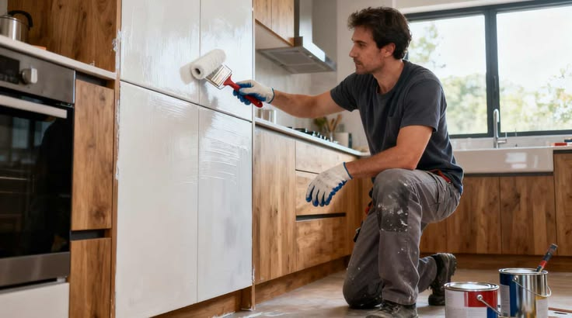
The professional kitchen cabinet painting cost varies from one home to the next. No single figure fits every kitchen. Several factors move the cabinet painting price up or down:
The number of doors, drawers and cabinet boxes
The condition of the existing surfaces and any repairs needed
A major color change, such as dark wood to white, which may need extra coats
The grade of primer and topcoat
Add-ons such as new hardware, countertops or a backsplash
Replacement is a different story. It means demolition, weeks of waiting and a larger bill. Refinishing keeps the cabinet boxes you already own and changes only what you see.
Spread the cost over ten or more years of daily use, and the yearly figure looks modest. For a reliable number, request an itemized written quote. Compare what each quote includes, not only the total.
Professional Painting vs DIY: A Durability Comparison
Many people try a weekend project first. Some enjoy it. Results vary, though. Home kits rarely match the hardness of professional coatings. Rollers cannot build the smooth, even layer that spray equipment delivers. Curing is another gap. A rushed DIY job gets used too soon, and the paint stays soft under the surface.
Professionals also work with a schedule. Each coat dries before the next one begins. That patience shows up years later, when the finish still looks crisp.
Simple Care Tips That Add Years
Good habits protect a good finish. Small ones, mostly.
Wipe spills promptly, especially oil and tomato sauce.
Use a soft cloth and mild soapy water for cleaning.
Skip abrasive pads and harsh chemical sprays.
Open doors by the handles, not by the edges.
Run the range hood while cooking to cut steam and grease.
Avoid hanging wet towels over cabinet doors.
Signs Your Cabinets May Need Attention
Wear rarely appears overnight. Look for early signals:
Dull patches near handles
Hairline cracks at door joints
Peeling along edges
A sticky feel after cleaning
Catching these early often means a simple touch-up rather than a full refinish.
Conclusion
Painted cabinets can serve a household for well over a decade. Preparation, quality coatings, smooth application and sensible care all play a part. Chipping is manageable, and the price compares well with replacement.
At 180 Transformations, we refinish kitchen cabinets across Waterloo Region and nearby communities. Our online cabinet refinishing estimator gives a starting figure, and a free consultation gives an exact one. We would be glad to help you plan your kitchen update.
Frequently Asked Questions
1. How long do painted cabinets last in a busy household?
A busy home may see wear sooner, often closer to the lower end of the 10- to 15-year range. Careful cleaning and prompt touch-ups help the finish stay in good shape for longer.
2. Do painted cabinets chip more than stained ones?
Both finishes can chip under a hard knock. Paint tends to show chips more because the color sits above a different base. The repair is usually quick and inexpensive.
3. Is professional kitchen cabinet painting cost lower than replacing cabinets?
In most cases, yes. Refinishing avoids demolition, new materials and long lead times. The exact savings depend on the size of the kitchen and the scope of work.
4. How soon can new painted cabinets be used normally?
Light use is generally fine within a few days. Full hardness can take a few weeks, so gentle handling during that time protects the finish.
