A ceiling can look fine for thirty years and still hide a surprise. Many Ontario homes built before the mid-1980s have that bumpy, sprayed-on texture, and owners now want it gone. Before a scraper comes out, three questions need answers: what is the texture made of, what will it cost, and how is it taken off safely? This blog covers popcorn ceiling removal that Ontario homeowners ask about most, in plain steps.
Why Homeowners Choose to Remove Textured Ceilings
The texture was once popular because it hid flaws and softened sound. Today it often does the opposite. It traps dust, shows stains and casts tiny shadows that make a room feel older.
Common reasons we hear:
Dust and cobwebs cling to the bumps and are hard to clean
Water marks stand out and are tough to repair on a rough surface
Flat ceilings reflect light better, so rooms look brighter
Buyers often prefer smooth finishes at resale
Asbestos First: What Ontario Homeowners Should Know
Safety comes before style here. Spray-on ceiling texture applied before the mid-1980s sometimes contained asbestos fibers. Newer texture usually does not. Age alone, though, is never proof either way.
Which Homes Carry the Risk
Houses built or renovated before roughly 1990
Ceilings that were patched or recoated over the years
Homes with no records of the original materials
How Testing Works
Popcorn ceiling asbestos testing in Ontario follows a short path. A trained person takes a small sample, seals it and sends it to an accredited lab. Results often arrive within a few business days.
Do not scrape off a piece to check it yourself. Disturbed material can release fibers into the air, and they travel farther than most people expect. (A plastic drop sheet will not stop them.)
A sound testing routine looks like this:
Book a qualified inspector or a sampler linked to an accredited lab.
Ask for samples from more than one spot, since layers can differ.
Wait for written lab results before any work begins.
If the Result Is Positive
Ontario’s asbestos regulation, O. Reg. 278/05, sets out how contractors must handle this material. Dust control, protective equipment and approved disposal all apply.
Some owners choose to leave the texture alone, seal it or cover it with new drywall. These options usually cost less than full abatement and keep the fibers contained.
What Does It Cost?
Prices shift with the city, the ceiling height and the layout of the house. The figures below are general estimates. Treat them as a starting range, not a quote.
Typical Price Ranges
Asbestos lab test: about $50 to $100 per sample, plus any visit fee
Texture removal on tested, asbestos-free ceilings: roughly $1.50 to $4 per square foot
Abatement by trained crews: often several times the standard rate
For a 1,000-square-foot ceiling area, popcorn ceiling removal cost Ontario homeowners see tends to land between $1,500 and $4,000. Painting may add to that figure.
What Moves the Price
Total ceiling area and height
Number of texture layers and old paint coats
Water damage, cracks or sagging drywall
Furniture that needs to be moved out
The final finish, such as a skim coat, plain paint or new drywall
Budget Tips
Test first. It prevents a costly surprise halfway through the job.
Combine ceiling work with room painting so prep happens once.
Ask for written quotes that list repairs and paint on separate lines.
Compare what each quote includes, not only the total.
The Removal Process, Step by Step
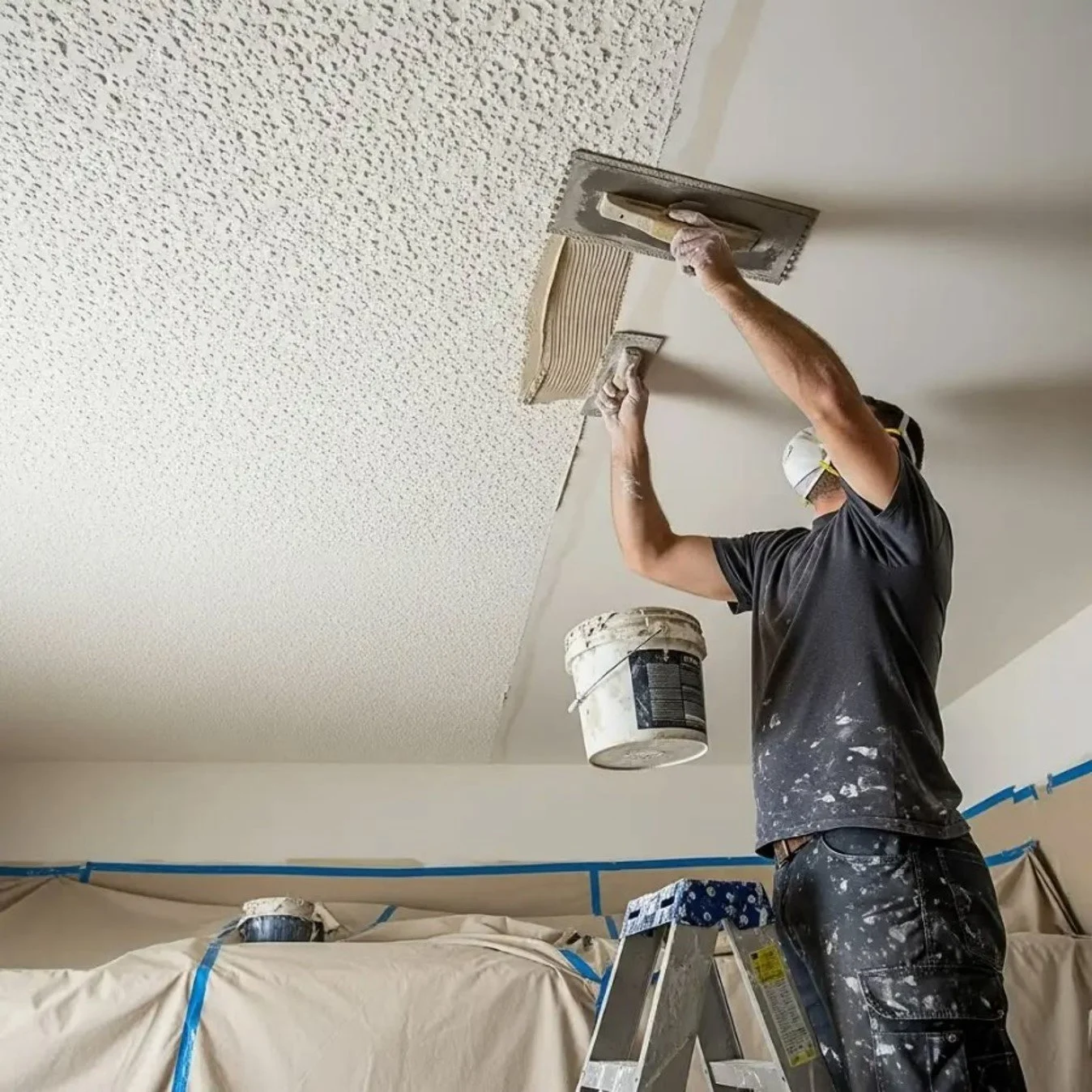
This process applies to ceilings that have tested negative for asbestos. A positive result calls for a different, regulated approach.
Clear the room. Move furniture out if possible. Cover anything that stays.
Protect the surfaces. Lay plastic over floors and tape it to the baseboards. Cover walls and fixtures too.
Shut off the power. Switch off the circuit to ceiling lights and fans, then cover them.
Mist the texture. A light spray softens it. Too much water can stain the drywall, so a gentle hand works best.
Scrape in small sections. A wide knife lifts the texture in strips. Work slowly and keep the blade angled so it does not gouge the board.
Repair the surface. Fill dents, tape cracks and apply a thin skim coat of joint compound for a smooth base.
Sand, prime and paint. Sand lightly, wipe away the dust, then prime. Primer stops the new paint from soaking in unevenly.
Expect the job to take a few days for an average home. Drying time between coats is the part that stretches the schedule.
Quick Tips Before You Book
Ask to see the lab report before work starts
Confirm how the crew will contain dust between rooms
Check that the quote covers disposal of old material
Ask about insurance and workmanship coverage
Plan for a day without use of the room after painting
DIY or Professional Help?
A small bedroom with a negative test result is a realistic weekend project. It is messy, though, and the overhead work strains the neck and shoulders. Smooth skim coating also takes practice, and uneven patches show up under side lighting.
Larger areas, tall ceilings and any suspected asbestos belong to a trained team. The time saved and the cleaner finish often balance the cost.
Conclusion
A smooth ceiling is worth the effort, yet the order of work matters most. Test the texture, understand the price range and follow a careful removal routine. Each step protects your health and your budget.
At 180 Transformations, we help homeowners across the Waterloo region with texture removal, drywall repair and painting. We recommend testing before anything else, then planning the work around the result. Book a free estimate with us to talk through your ceiling and the options that suit it.
FAQs
1. How can I tell if my popcorn ceiling contains asbestos?
You cannot tell by looking at it. Only a lab test can confirm it. Homes built before the mid-1980s carry a higher risk, but a sample is the only reliable answer.
2. How long does popcorn ceiling removal take in Ontario?
An average room usually takes one to two days for removal and repairs. Priming and painting add more time because each coat must dry fully.
3. Is popcorn ceiling removal cost in Ontario higher with asbestos?
Yes, often by a wide margin. Abatement requires containment, protective equipment and approved disposal, which add labor and fees. Covering the ceiling with new drywall may reduce the cost.
4. Can I paint over a popcorn ceiling instead of removing it?
You can, and it costs less upfront. The bumpy surface stays, so dust and shadows remain. Painting also makes later removal harder, since the paint seals the texture and slows scraping.