
Wood cabinets rarely fail all at once. The finish dulls near the stove, the edges darken where hands land every morning, and slowly the whole kitchen looks worn. Many homeowners then ask whether cabinet staining can bring back the warmth without a full replacement. Often it can. In this blog, we explain what the work costs, how it is done, and the point where paint becomes the wiser choice.
Why Homeowners Choose to Restain
Replacing cabinets is expensive and slow. Restaining kitchen cabinets keeps the existing boxes and doors, so the layout stays put and demolition stays out of the picture.
Here are the reasons we hear most often:
The current color feels dated, such as orange oak or a heavy red-brown tone.
The finish has worn thin around handles and the sink.
New counters or flooring no longer match the wood.
The wood is sound, and the owner wants to keep its natural grain.
Grain is the real attraction. Stain lets the pattern show through, while paint hides it. That single difference often settles the whole decision.
How Much Does Cabinet Staining Cost?
The cabinet staining cost depends on kitchen size, wood condition and how far the color must change. The figures below are general estimates in Canadian dollars. Actual quotes differ by contractor and by region.
Typical Price Ranges
DIY with store-bought materials: about $300 to $800
Professional work on a small kitchen: about $2,500 to $4,500
Professional work on an average or large kitchen: about $4,500 to $9,000
Full cabinet replacement, for comparison: often $15,000 or more
These numbers give a rough picture of the cost to restain kitchen cabinets, though they are not a quote. Only an in-person visit and a written estimate give a reliable figure.
What Moves the Price Up or Down
Door and drawer count: More surfaces mean more hours.
Starting condition: Grease, old varnish and deep scratches add prep time.
Colour change: Light to dark is simpler. Dark to light may need extra stripping and bleaching.
Wood species: Open-grain oak behaves differently from smooth maple.
Topcoat quality: A durable, water-resistant coat costs more but protects longer.
Work location: Spraying doors in a shop can raise the price, yet it often gives a smoother finish.
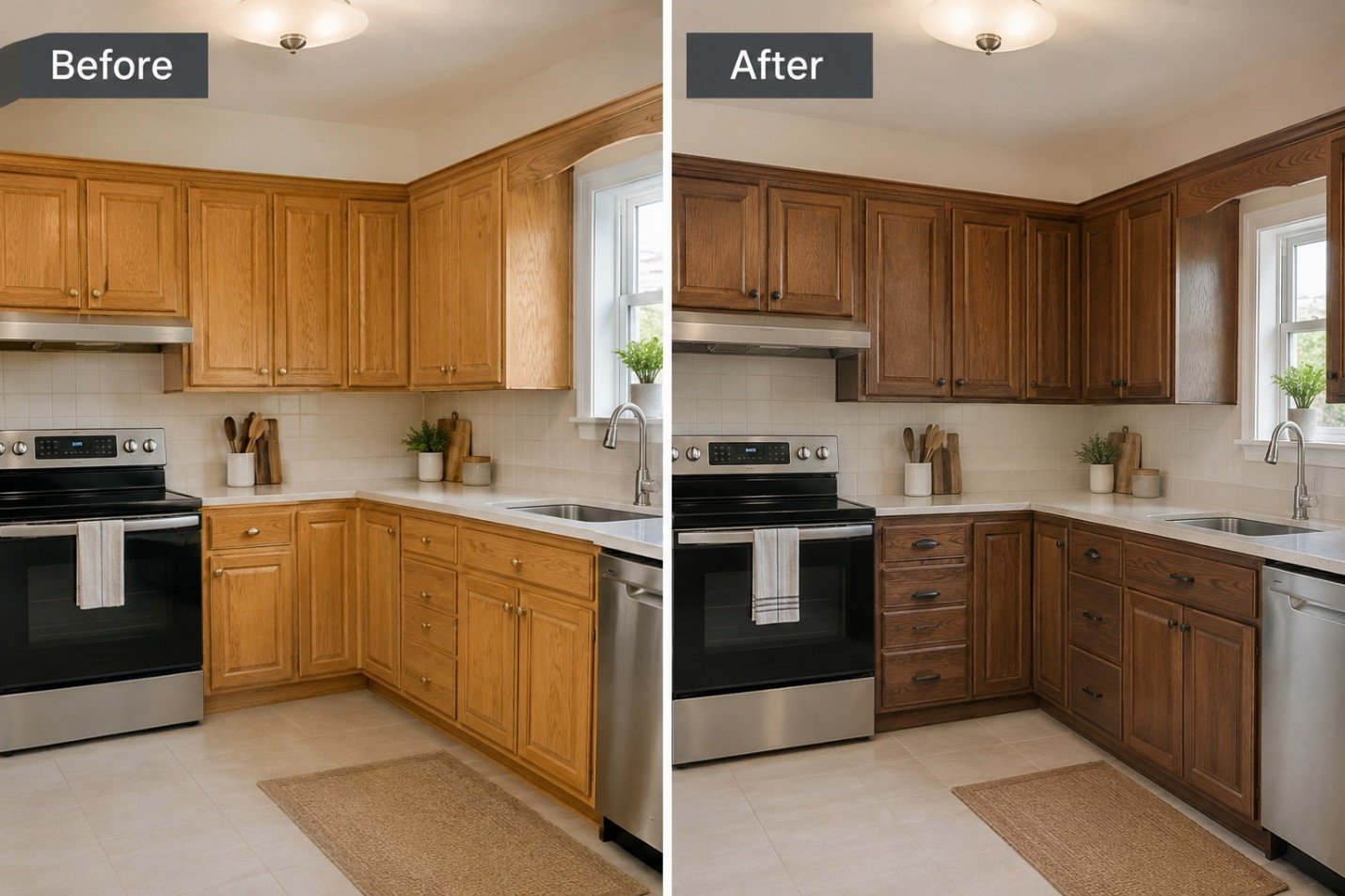
The Restaining Process, Step by Step
Preparation decides the result. The stain itself goes on quickly, almost like the final minutes of a long cooking day. This is the order we follow.
Inspect the wood for water damage, cracks and loose joints.
Remove doors and hardware, then label each piece so it returns to its original spot.
Clean and degrease every surface. Cooking oils block stain from soaking in evenly.
Strip or sand away the old finish. Stain needs bare wood to bond, and this stage takes the longest.
Fill small dents and gouges with products that accept stain.
Test the color on a hidden area, then apply thin, even coats along the grain.
Seal with a clear topcoat to guard against moisture, heat and daily wiping.
Allow the finish to cure before rehanging doors.
Most kitchens take three to seven working days, depending on drying times and the season.
When to Paint Instead
Stain is not right for every cabinet. Sometimes paint is the sensible path, and saying so early saves money.
Signs That Paint Is the Better Option
The cabinets are laminate or thermofoil. Stain cannot absorb into these materials.
The wood has heavy damage or many repairs that a transparent finish would reveal.
The doors use mixed woods with grain that does not match.
The goal is a white, grey or bold color such as deep green.
A dark existing stain must become much lighter.
A Quick Comparison
Stain: shows natural grain, deepens wood tone, needs careful stripping.
Paint: hides flaws, offers nearly endless colors, covers most materials.
Cost is close in many projects because preparation drives both. Choose by the look you want and the condition of your wood, not by price alone.
Smart Ways to Control the Budget
Request itemized quotes from at least three contractors.
Keep the current layout. Moving cabinets changes the total quickly.
Pick a shade near the existing one, since smaller shifts need less stripping.
Reuse hinges and pulls, or swap only the handles.
Empty the cabinets before work begins to save labor time.
Ask about warranty terms on the finish before signing.
DIY or Hire a Professional?
A weekend effort can work for a single bathroom vanity. A full kitchen is a different story. Stripping old varnish is slow and messy, and uneven stain is hard to correct once it dries. Blotchy results are the most common problem we see when homeowners ask us to repair an earlier attempt.
Professionals also bring spray equipment, proper ventilation and finishing products that are hard to find at a typical hardware store. Weigh the money saved against the price of a redo.
Conclusion
Restaining can renew a kitchen at a fraction of the price of new cabinets, provided the wood is in good shape and the color change is realistic. Paint takes over when the material, damage level or desired look calls for it. A clear inspection is the best first step.
At 180 Transformations, we serve homeowners across Kitchener-Waterloo, Cambridge and Guelph. We assess each kitchen honestly, explain whether stain or paint suits it, and provide a written estimate before any work begins. Contact our team to arrange a visit.
FAQs
1. How long does a restained cabinet finish last?
With thorough prep and a quality topcoat, a finish commonly lasts many years, often a decade or more. Daily care, kitchen humidity and sunlight all affect that timeline.
2. Can cabinets be restained without sanding?
Chemical strippers and deglossers can reduce the amount of sanding. The old finish still has to be removed, because stain cannot bond to it.
3. Is cabinet staining cost lower than painting?
The totals are often similar, since both depend on preparation time. Staining can cost more when old finishes are thick and stubborn. Painting can cost more when many coats are needed to hide dark wood.
4. Can dark cabinets be restained to a lighter color?
Sometimes, but it may require stripping and bleaching, and the result can look uneven. Paint is usually the more dependable route for a major shift toward light.
